Leetcode Hot 1002 分钟
6 次阅读
反转链表
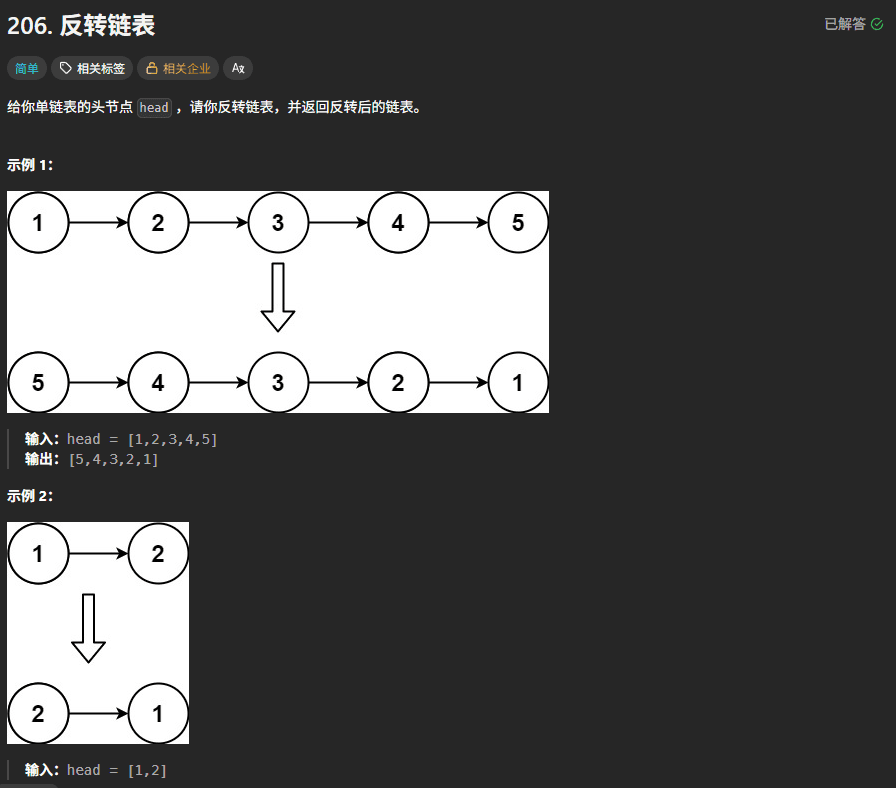
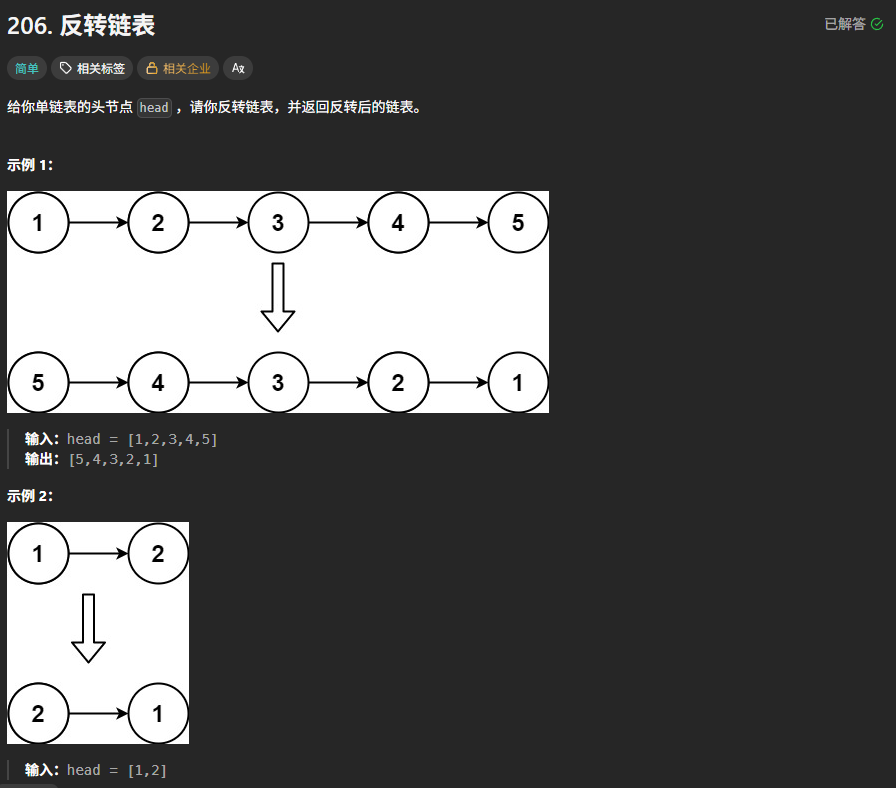
本文介绍了反转链表的两种解法:使用字典存储前驱节点的笨办法,以及使用双指针迭代的高效方法,并附有详细代码和边界说明。
阅读要点
- 反转链表是链表操作的基础题。
- 解法一使用字典存储前驱节点,空间复杂度 O(n)。
- 解法二使用双指针原地反转,空间复杂度 O(1)。
- 注意处理空链表和单节点边界。
- 反转后需将原头节点的 next 置为 None 避免成环。
题目
解法一:字典法
思路:先遍历链表,用字典记录每个节点的前驱节点。然后从尾节点开始,利用字典反向连接,最后将原头节点的 next 置为 None 避免成环。
复杂度:时间复杂度 O(n),空间复杂度 O(n)。
答案
# Definition for singly-linked list.
# class ListNode:
#     def __init__(self, val=0, next=None):
#         self.val = val
#         self.next = next
class Solution:
    def reverseList(self, head: Optional[ListNode]) -> Optional[ListNode]:
        # 处理空链或单节点
        if not head or not head.next:
            return head
        mp = collections.defaultdict()
        temp = head
        while(temp.next):
            mp[temp.next] = temp
            temp = temp.next
        res = temp
        while temp in mp:
            temp.next = mp[temp]
            temp = temp.next
        temp.next = None  # 不加则成环了,提交会超时
        return res
解法二:双指针法
思路:使用 pre 和 cur 两个指针,pre 初始为 None,cur 指向头节点。遍历链表,每次将 cur.next 指向 pre,然后 pre 和 cur 同时前进。注意在修改 cur.next 前需要暂存下一个节点。
复杂度:时间复杂度 O(n),空间复杂度 O(1)。
答案
# Definition for singly-linked list.
# class ListNode:
#     def __init__(self, val=0, next=None):
#         self.val = val
#         self.next = next
class Solution:
    def reverseList(self, head: Optional[ListNode]) -> Optional[ListNode]:
        if not head or not head.next:
            return head
        pre = None
        cur = head
        while cur.next:
            temp = cur.next
            cur.next = pre
            pre = cur
            cur = temp
        cur.next = pre
        return  cur